Nimbus: Rethinking Weather Apps
Nimbus is a UX case study in progress, reimagining weather apps as emotionally engaging and enjoyable experiences. Inspired by cozy games and virtual companions, the project explores how thoughtful design can make daily weather check-ins feel more personal, playful, and uplifting.
The Problem
Most weather apps are purely functional—offering data without much personality, joy, or emotional support. For users affected by weather changes, like those managing chronic pain or seasonal mood shifts, this can make daily planning feel dull or even draining. But even for everyday users, checking the weather doesn’t have to be boring. There’s a missed opportunity to turn it into something more playful, comforting, and enjoyable—an experience people actually look forward to.
The goal is to design a weather app that not only informs but uplifts. Nimbus aims to make weather checking a fun, emotionally-aware experience by combining real-time forecasts with virtual rewards, wellness prompts, and a charming mascot who grows alongside the user. The goal is to support emotional wellness while keeping functionality intuitive and delightful.
Introduction
So Why Nimbus?
As someone who loves and even streams cozy, low-pressure games like Pokémon Sleep, I’ve always been drawn to experiences that feel immersive, comforting, and a little magical. I grew up on Tamagotchi and Nintendo dogs and i wanted to bring something like that to an everyday app I’ve found that having a virtual companion—like Snorlax in Sleep or a farming pet in idle games—not only makes the experience more engaging, but also creates a gentle sense of motivation and emotional support.
That sparked the idea for Nimbus: what if checking the weather could feel less like a routine task and more like a friendly moment with a friend? I wanted to design something that turns a simple daily habit into a positive, interactive experience—one that supports well-being while keeping things fun, calm, and immersive.
Competitive Analysis
To get a better feel for what’s already out there, I looked at some of the most popular weather apps to see what they do well and where they fall short. Most of them are great at delivering accurate data, but they often feel cold, cluttered, or overly technical. There’s not much focus on emotional connection or making the experience feel enjoyable. This analysis helped highlight where Nimbus could stand out—by making weather feel a little more human, friendly, and engaging.
MosCow Analysis
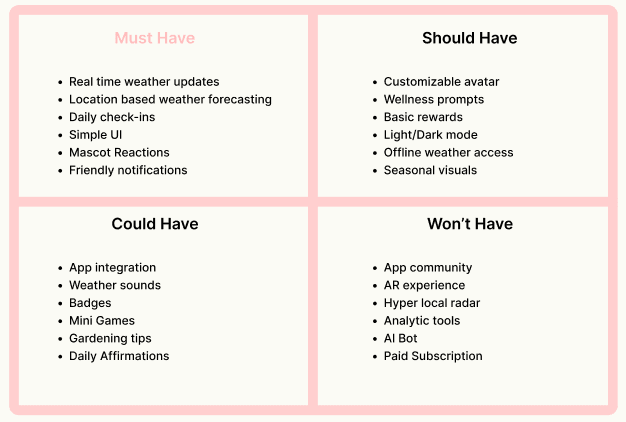
To prioritize what features and elements matter most for Nimbus, I used the MoSCoW method—breaking things down into what the app Must have, Should have, Could have, and Won’t have (for now). This helped me stay focused on the core experience I want to deliver while leaving room for future ideas without overloading the first version.
Background
Research
Weather impacts emotional well-being: Research by the American Psychological Association (APA) shows that weather conditions can significantly impact mood, productivity, and mental health. For example, over 10 million people in the U.S. experience Seasonal Affective Disorder (SAD), with symptoms peaking during the colder months when sunlight is limited.
Weather affects decision-making: A study by AccuWeather found that 60% of users check the weather app multiple times a day to plan activities, revealing the frequency and importance of weather information in daily life. However, many of these apps are more functional than emotionally engaging.
Behavioral engagement: A study by Harvard Medical School indicated that gamified elements, such as rewards or virtual companionship, increase engagement by up to 30%, especially when integrated into routine tasks.
Market Gaps in Weather Apps
Traditional apps focus on data, not emotion: Popular weather apps like AccuWeather, Weather Underground, and The Weather Channel focus mainly on delivering detailed forecasts, often in a crowded and overwhelming interface. According to a 2018 report by Statista, 92% of smartphone users in the U.S. use a weather app, yet many report these tools as "cold" or "impersonal."
Limited emotional connection: Apps like Carrot Weather attempt humor and personality, but still lack a deeper emotional connection or personalized features. User reviews often cite the app as fun but missing an emotional layer, particularly for users who seek support during stressful weather conditions.
Gamification and Emotional Design in Apps
Idle games as emotional engagement: Games like Pokémon Sleep, Animal Crossing, and Stardew Valley use casual, low-effort interactions to foster emotional attachment. These games often include virtual companions or environments that react to the player's actions, creating a sense of care and investment. For example, Pokémon Sleep had over 5 million downloads in its first month, largely due to its relaxed, engaging design that combines gameplay with daily habits.
Gamification boosts user retention: According to Gartner, 70% of Fortune 500 companies have implemented gamified elements in their products, noting a 20-60% increase in engagement. Studies show that introducing rewards or progression (e.g., leveling up) can enhance habitual usage, particularly for apps designed around daily tasks.
Positive emotional design: Research by Nielsen Norman Group shows that apps designed with emotional and social cues—such as friendly characters, positive reinforcement, and personalized interactions—create deeper user loyalty. These cues improve user satisfaction by up to 40%.


Reliable
Funny
Hyper local Forecasts
Clean Design
Friendly
Overwhelming
Humour not for everyone
Cluttered Interface
Lacks Engagment
Less features
Prioritizing simplicity and emotion over information density
Personality works along with humour for engagement
Visual clarity is important for user retention
Balance simple clean designs with game elements
Keep UI calm and simple
The end… or just the beginning?
You made it this far — might as well say hi!
App
Strengths
Weaknesses
What We Learn